Gusto is from the Latin word “gustus,” meaning a tasting and has come to mean hearty enjoyment. In some Spanish-speaking countries, mucho gusto (much pleasure) is used as a greeting as in “it’s a pleasure to meet you.”
Last week, we had to say goodbye to our beloved terrier mix, Gracie. Though ten-and-a-half years old, she seemed much younger because of her indomitable spirit and pure enthusiasm for everything life offered.
Unlike our other dogs who at the end had faded into shells of their former selves from old age or illness, Gracie left this world still Gracie. She continued to run around like a puppy, play “Gladiators” and tug-of-war several times a day with our two-year-old pup, Tilly, and race to the yard to chase away any hapless wildlife that wandered onto our property. Even on our way out the door for that final sad trip to the vet, she was pulling on the leash, eager to get to the next adventure.
After finding out just before Christmas that she had an inoperable tumor on her heart, we had to confine her to leash walks. It was abundantly clear that Gracie felt this an unnecessary precaution. She would run to the end of the leash for every tennis ball that came near us and tried her best to join in the wrestling matches Tilly engaged in with other dogs. It was hard to comprehend that she was dying when we saw how much energy she still possessed. But as willing as her spirit was, her flesh was too weak to continue. Still, we got two more months with her instead of the two weeks the doctors thought she had.
Thankfully, she left us with a lifetime of memories. After all, Gracie was not a dog that passed through people’s lives unnoticed.
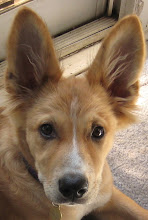
First, there was her unique look. After much observation of other breeds, our best guess is that she was a boxer, pit bull, wired-haired Jack Russell mix. Her brindle fur was a crazy, course blend that went off in wild directions everywhere except at the top of her head and ears, which were soft and smooth. Jamie’s brother dubbed her the “boot scrape.” And that was just one of the innumerable comments she elicited over the years. Wherever she traveled, people were compelled to remark on her looks—some laughing, while others declared her to be “rad.” My all-time favorite observation was “That dog looks like a Dr. Seuss character!”
As wild as her looks were, her personality was even more exceptional. Being a double terrier, her early years were colored by her inability to control her dog desires. As much as she wanted to be a good dog and do what you asked, it was impossible to ignore the devil on her other shoulder. More times than not, she ran with the devil.
There was the time in Cambria when we were at a working farm that sold its own preserves and other goodies. Gracie decided to slip her collar and chase after the resident pets—which happened to be peacocks. I’ve never heard so much squawking and feather flurrying. Peacocks aren’t exactly graceful when they have to lift those big bodies into the air quickly. So it was quite a spectacle watching the females jump-flap their way onto the porch’s tin roof while the males displayed their tails and charged at the frenzied dog. Gracie was not intimidated. Luckily, I grabbed her before any blood was shed. There was, however, a tremendous layer of fertilizer left by the panicked birds, which both Gracie and I were unable to avoid.
I believe that was the same trip where, while we were dining with friends, she eschewed the marrow bones we had provided and instead chewed on every knob in my car. (Years later when we traded that car in, the salesperson politely described its condition as “rough.”)
There are countless other Gracie stories—like her darting past a “We shoot intruders” sign to harass some backyard chickens—but then you’d think she was just a bad dog. And there was so much more to her.
Gracie was a great comedian. She would do anything for a laugh. If shaking her toy a certain way got a laugh out of the crowd, then she’d parade around the room repeating her act. Through the years, she modeled many Halloween costumes or parts of costumes, much to the delight of the partygoers. Perhaps it was her way of expressing thanks for the cheese and meatballs and other morsels from their plates that they had been feeding her all night (sometimes inadvertently).
There was also Dr. Gracie, which had several incarnations. One was the compassionate, doe-eyed girl who tried to console both human and canine sufferers, whether from a mental or physical hurt. There was the Dr. Gracie who took everyone’s temperature by way of a greeting (not her best habit). And of course, the Dr. Gracie who could remove the squeaker from a toy with laser-like precision.
As sad as I am at her passing, I can’t help by smile when I think of Gracie. Her approach to life—relishing every inch and minute of it—is a wonderful lesson in happiness.
While all of my dogs are special in their own way, I don’t believe another one will come along in my lifetime with such a big, unforgettable personality. Gracie will always stand out in my memory. Just like she did in life.
And if we get to meet again on the other side, I will greet her with mucho gusto.